Finding an error on your official real estate documentation can be a deeply unsettling experience. Whether it is a misspelled legal name on a grant deed, an incorrect parcel data entry on your property tax bill, or a structural calculation mistake by the local assessment office, uncorrected property record errors can cloud your title, delay a future refinancing or sale, and even cause you to overpay your annual property taxes. In the State of California, land records are managed by two distinct municipal divisions at the county level. The County Recorder (who maintains historical deed filings and ownership titles) and the County Assessor (who calculates land values and issues tax assessments). Fixing an issue requires working through the specific administrative pathways of these departments. This comprehensive guide outlines the exact, step by step frameworks needed to clean up your public record filings securely.
Classifying the Root Cause of the Property Record Error
Before submitting paperwork to a municipal agency, you must determine whether the mistake was a typographical slip made by a county clerk or a systemic legal error introduced on the original transfer paperwork.
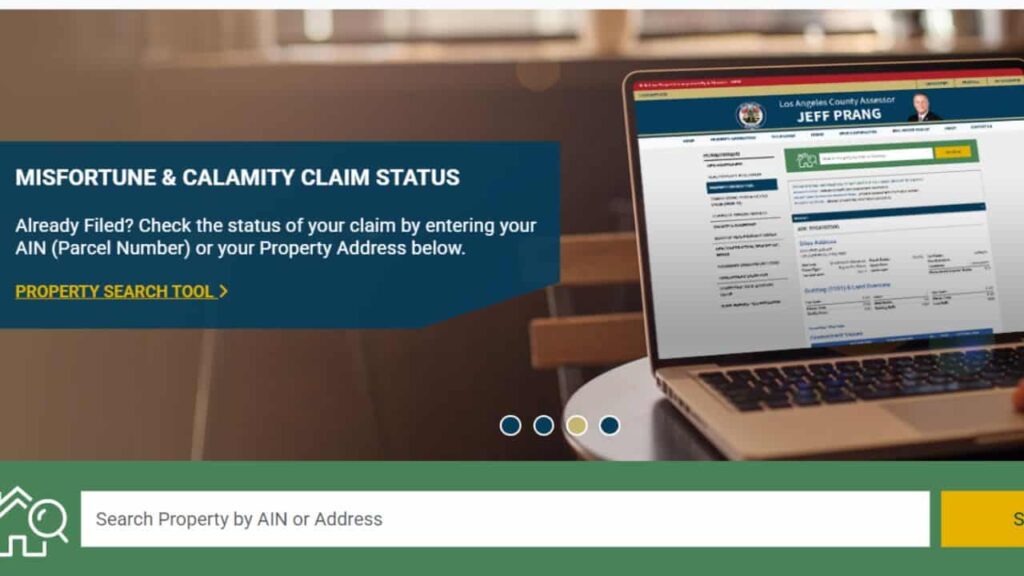
Identifying a County Assessor Mistake
Sometimes, the original deed you recorded at the county office is 100% correct, but an administrative typo occurs inside the tax assessor’s internal database. If your name is spelled right on your deed but scrambled on your property tax bill, or if the assessor’s website lists your lot size or square footage incorrectly, it is classified as a County Assessor mistake. These typographical blunders do not require recording brand new legal instruments; instead, they are handled internally via administrative corrections.
Identifying a Third Party Deed Error
If the error originated within the actual legal instrument used to purchase or inherit the asset such as a typo in the legal description or a misspelled grantor/grantee name on a Grant Deed or Quitclaim Deed the county cannot simply change the data. Because a recorded deed is a binding legal document under California law, any modification alters the chain of title. You must execute and file a new corrective document to resolve the issue legally.
Framework for Correcting Public Data Distinctions
The administrative action you must take depends heavily on whether you are adjusting data on an active title deed or fixing a billing issue within a tax calculation profile.
| Error Classification | Primary Document Required | Local Government Department |
| Minor Typographical Slip on Deed | Recorder Corrective Affidavit (Gov. Code § 27361.6) | County Clerk Recorder |
| Major Legal or Name Error on Deed | Correction Deed or Re Recorded Original Deed | County Clerk Recorder |
| Incorrect Assessor Tax Data Profile | Request for Clerical Error Correction Review | County Assessor Office |
| Unreported Change of Ownership | Change of Ownership Statement (COS / PCOR) | County Assessor Office |
Step by Step Blueprint to Fix Property Record Errors in California
To resolve real estate recording issues without causing title defects or triggering dynamic reappraisal penalties, implement this chronological blueprint.
Step 1. Fix Minor Typos with a Recorder Corrective Affidavit
If the error on a recorded deed is minor such as a missing return address, an illegible name typed near a signature line, or an incorrect documentary transfer tax declaration you can use a simplified fix under California Government Code Section 27361.6.
- Secure a blank Recorder Corrective Affidavit form from your local county clerk recorder portal (e.g., LA County Registrar Recorder or Contra Costa Clerk).
- Fill out the form, checking the precise box that indicates the error you are fixing. Provide a clear reference to the original document’s tracking index number or book/page citation.
- Sign the affidavit in front of a certified California Notary Public.
- Attach the affidavit to a certified copy of the erroneous deed and submit it to the County Recorder with standard recording fees to heal the public timeline.
Step 2. Execute a Correction Deed for Major Boundary or Title Errors
If the error involves a flawed metes and bounds legal description or a severe misspelling of an owner’s legal identity, a simple affidavit will not suffice. You must execute a formal Correction Deed.
- Draft a brand new deed reflecting the accurate data. The wording must mirror your state’s standard deed requirements but feature a clear “Correction Cover Page” explaining the adjustment.
- Ensure the cover page states. “This document is being recorded to correct an error in the description/name on the deed originally recorded on [Date] as Instrument Number [Number].”
- Track down the original Grantor (the past seller or transferor). Under California law, a correction deed must be signed and notarized by the original party who made the mistake to preserve the chain of title. If the grantor is deceased or uncooperative, you may be forced to file a formal Quiet Title Action in California Superior Court to get a judicial decree.
Step 3. Clear Assessment Variances with the County Assessor
If the error involves a property tax assessment, a square footage inflation, or a missing exemption status, you must correct the data path at the assessor’s office.
- Download a Request for Clerical Error Correction form from your county assessor’s digital portal.
- Collect supporting evidence. For structural size errors, attach your home’s original certified blueprint or an official private appraisal report showing the correct square footage.
- File the paperwork along with a Change of Ownership Statement if the issue stems from an unindexed transfer processing delay.
- Under California Revenue and Taxation Code Section 4831, the assessor has the authority to correct clerical errors on the tax roll at any time within four years of making the original assessment, which can trigger a retroactive property tax refund.
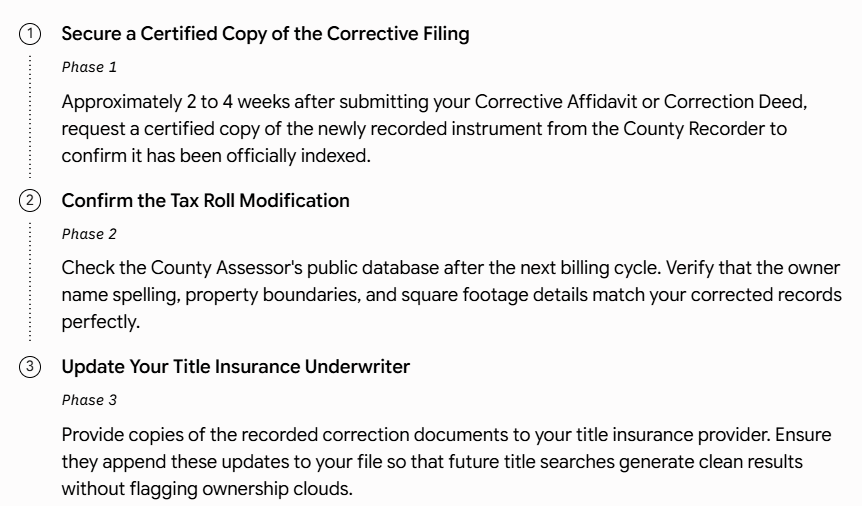
Post Correction Safeguards, Verifying Your Updated Records
Once your correction instruments are filed, you must confirm that the data changes flow completely through all municipal databases.
Conclusion
Successfully executing a fix for a property record error in California is essential to protect your home’s valuation and secure your chain of title. Whether you are addressing an administrative County Assessor mistake regarding incorrect parcel data or recording a formal Correction Deed to resolve a third party title defect, working through municipal channels with precision prevents future escrow delays. Filing a Change of Ownership Statement or a Clerical Error Correction form ensures your public records remain flawless, shielding your real estate investment from costly title clouds, tax overpayments, and insurance disputes.
FAQs
How do I fix a misspelled name on a California property deed?
You can resolve minor typos by filing a notarized Recorder Corrective Affidavit under Government Code Section 27361.6, or record a formal Correction Deed for major identity errors.
What should I do if the California County Assessor has my house square footage wrong?
Submit a Request for Clerical Error Correction form directly to the County Assessor office, backed by an official blueprint or private appraisal report to prove the incorrect parcel data.
Can a property record error impact my California property tax bill?
Yes. An inflated structural size or land calculation error can cause a substantial County Assessor mistake, leading you to overpay your annual secured real property taxes.
What is a Correction Deed, and when is it required in California?
A Correction Deed is a legal instrument used to rectify major errors in a recorded deed, such as flawed boundary lines or missing legal descriptions, requiring the original grantor’s signature.
How far back can the California County Assessor correct an error?
Under Revenue and Taxation Code Section 4831, the assessor can rectify a clerical roll mistake and issue a property tax refund within four years of the original assessment.
What happens if the original seller refuses to sign a Correction Deed?
If the past grantor is uncooperative or deceased, you must file a formal Quiet Title Action in a California Superior Court to clear the ownership cloud legally.
What is the role of a Change of Ownership Statement during corrections?
A Change of Ownership Statement (or PCOR) updates the assessor’s database regarding title transfers, ensuring correct tax bill routing and avoiding failure to file administrative penalties.
Is there a filing fee to fix an official county property record error?
If the error was made by a county clerk, they will usually fix it for free. For third party deed adjustments, standard county recording and document modification fees apply.
Will a title insurance policy cover errors found in public property records?
Yes. If an unrecorded lien or pre existing deed mistake surfaces after closing, your owner’s title insurance policy typically covers the legal costs to remedy the title defect.
How long does it take for a corrected deed to reflect online?
Once the County Recorder indexes your corrective instrument (typically 2 to 4 weeks), the updated data will propagate to the assessor’s tax roll during the next billing cycle.