Under the California Public Records Act (CPRA), real property records are legally classified as public documents to maintain market transparency. However, executing an online property search in California isn’t as simple as a basic web query. To shield homeowners from data scraping, state laws enforce strict privacy restrictions and owner confidentiality protocols. This legal division between open records access and digital redaction is critical for secure real estate investments and asset protection.
The Legal Foundation, The California Public Records Act
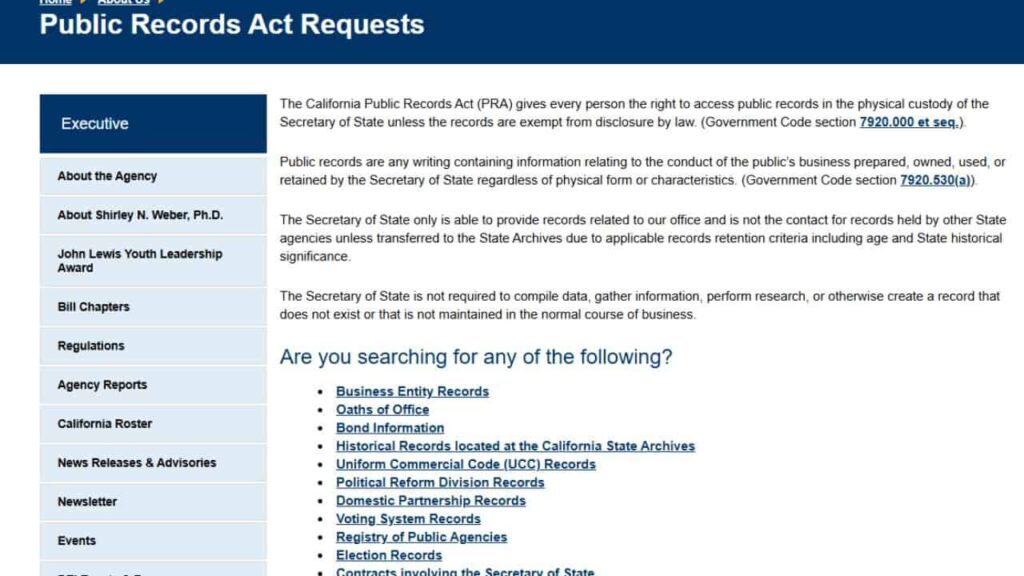
The baseline law governing access to land documentation is the California Public Records Act (CPRA), codified under Government Code Section 7920 et seq. (formerly famously referenced as Government Code Section 6250).
In enacting this chapter, the Legislature, mindful of the right of individuals to privacy, finds and declares that access to information concerning the conduct of the people’s business is a fundamental and necessary right of every person in this state.” California Government Code
Under this legislative framework, any recorded document that impacts real property such as deeds, mortgages, liens, easements, and covenants is considered a matter of public interest. The law ensures accountability, allowing transparency in real estate transactions, tax assessments, and property ownership validation. However, the CPRA explicitly recognizes that a homeowner’s right to personal privacy must co exist with public access. This balance creates a structured system where records are accessible but protected from automated digital exposure.
Online vs Offline, How Privacy Laws Limit Digital Access
The biggest point of confusion for property owners is the difference between what is “public record” and what is “hosted on the open internet.” To protect residents from corporate data scraping, identity theft, and stalking, California law places strict fences around online portals.
The Impact of Government Code Section 6254.21
Under Government Code Section 6254.21, state and local agencies are strictly prohibited from posting the home addresses or telephone numbers of any elected or appointed public officials online without explicit written permission. This group includes judges, police officers, city council members, and state legislators.
Because county databases cannot easily segregate public officials’ homes from everyday citizens without extensive administrative overhead, many county assessors (such as the Los Angeles County Assessor) completely block public web based searches of property records by name or Assessor’s Parcel Number (APN).
Data Redaction and Index Only Portals
When you access a County Recorder or Assessor website from home, you are generally interacting with an index only registry. You can see that a transaction took place, the date, and the document tracking number, but the actual text, personal signatures, and financial account details undergo structural redaction.
To bypass these online barriers and view unredacted, complete files, you must complete an offline search. This involves visiting a physical county district office and utilizing their secure, internal public computer kiosks or ordering certified paper duplicates directly from the records counter.
What Property Data is Publicly Disclosed vs Exempt
Not every piece of information submitted during a real estate transaction becomes public information. California law distinguishes between structural details and private financial records.
| Data Classification | Publicly Disclosed | Legally Exempt / Confidential |
| Ownership & Title | Grant Deeds, Quitclaim Deeds, Vested Owner Names, and Corporate Entity Titles. | Homeowner phone numbers, personal email addresses, and private trust agreements. |
| Financial Liabilities | Mortgages (Deeds of Trust), Federal/State Tax Liens, Mechanics Liens, and Foreclosure Filings. | Personal credit scores, bank account statements, and monthly payment histories. |
| Property Specifics | Assessor’s Parcel Numbers (APN), land boundaries, square footage, and permit histories. | Internal asset appraisals, building security schematics, and private layout blueprints. |
Step by Step Guide to Accessing California Property Records
If you need to check a property’s record history for a transaction or due diligence, follow this standard step by step framework to work within California’s open records law effectively.
Step 1. Gather Baseline Parcel Identifiers
To request public files from a local agency, you must provide specific search parameters. Most agencies cannot search records using general terms.
- Locate the exact physical street address of the property.
- Find the Assessor’s Parcel Number (APN). If you do not have it, you can find it on a recent property tax bill or look it up on the local county assessor’s digital parcel map.
Step 2. Query the Local County Recorder Website
Start your investigation online to check if the local municipality offers digital indexing tools.
- Go to the official website of the specific county recorder where the land sits.
- Access the public “Grantor Grantee Index.” Search using the seller’s or current owner’s exact legal name to generate a list of all recorded deeds, liens, and title transfers.
Step 3. Visit the Local District Office for Full Document Inspection
If the online portal is restricted or requires expensive download fees to view document text, transition to an offline verification method.
- Visit the physical office or public lobby of the County Clerk Recorder.
- Log into an on site public computer kiosk. These secure terminals are exempt from open web hosting restrictions, allowing you to search by APN and review complete document text on screen for free.
- If the records are historic (typically pre 1980), request the physical microfilm records rolls or archival ledger index books from the counter clerk.
Protecting Your Privacy, A Legal Strategies for California Homeowners
If you are a private citizen concerned about owner confidentiality and want to reduce your digital footprint on public asset registries, you can utilize legitimate structural shields.
- Form a Limited Liability Company (LLC)
You can purchase real estate using a properly structured California LLC. When the deed is recorded, the corporate entity name appears in the public index, keeping your personal name off the public registry. - Utilize a Blind Land Trust
You can transfer your real estate title into a private land trust managed by a corporate trustee. The public records will only show the name of the trust (e.g., The 1042 Alpine Way Trust), keeping the beneficiaries’ identities confidential. - Opt Out of Commercial Data Aggregators
While you cannot remove your information from official government land registries, you can submit formal opt out requests to third party data brokers and real estate platforms like Whitepages, Spokeo, and Radaris to limit consumer access to your information.
Professional Land Title Advisory. While the California Public Records Act guarantees your right to access government land files, interpreting complex deed descriptions, old easements, and overlapping tax liens requires professional training. Before finalizing any California real estate transaction, always secure an official Preliminary Title Report from a licensed title insurance underwriter to safeguard your capital.
Conclusion
Balancing transparency and owner confidentiality is the core objective of the California Public Records Act. While real estate documentation remains open to ensure market accountability, modern privacy restrictions prevent the unrestricted scraping of sensitive personal data on the open internet. Working with these open records law structures whether by utilizing local county registrar public kiosks or setting up a corporate shield allows real estate professionals and residents to manage risk effectively. Mastering these state protocols ensures your property data remains accurate, secure, and compliant with California’s evolving legal frameworks.
FAQs
Are property records public in California by law?
Yes. Under the California Public Records Act (CPRA), public land titles, deeds, and tax liabilities are open for public review to maintain market transparency.
Can anyone look up who owns a house in California online?
Not easily. Many counties restrict online asset mapping and name searches due to strict privacy restrictions mandated under Government Code Section 6254.21.
What is the California Public Records Act (CPRA)?
It is a state framework (Government Code Section 7920 et seq.) granting citizens the absolute legal right to inspect public municipal data and land files.
How can I protect my property owner confidentiality in California?
You can safely obscure your personal identity by holding real estate titles through a properly structured Limited Liability Company (LLC) or a private land trust.
What public details undergo data redaction in California registries?
Online indexes typically obscure personal signatures, social security numbers, and private bank account routing numbers to proactively prevent identity theft and financial fraud.
Can I see a property’s history by APN at the assessor’s office?
Yes. Secure internal public computer kiosks located inside physical county offices are exempt from web hosting bans, letting you search unredacted files by APN.
Does California’s open records law cover tax lien filings?
Yes. Tax liens, active mortgages, foreclosures, and mechanics liens are recorded publicly to give notice of financial liabilities to potential buyers.
Can public officials hide their land records from the public index?
No. Their records are public, but Government Code Section 6254.21 prohibits local government agencies from posting public officials’ home addresses on the internet.
Why do some California county websites hide owner names?
Counties enforce name search blocks online to comply with digital privacy mandates, prevent automated automated scraping, and maximize homeowner safety from internet scammers.
How can I review historical microfilm records for old land parcels?
You must visit the local county registrar physical office and request access to archival film rolls or handwritten title ledgers from the desk clerk.