To understand your property tax bill, you must first understand how California values real estate. Unlike states where property taxes fluctuate wildly based on annual market swings, California operates under a highly regulated, predictable framework established in 1978 by Proposition 13. Navigating California’s unique fiscal timelines, supplemental bills, and strict assessment rules requires an authoritative roadmap. This comprehensive guide breaks down everything a California homeowner needs to know, ensuring you stay compliant, avoid penalties, and fully maximize your local exemptions.

Understanding the Foundation of California Property Tax
To understand your property tax bill, you must first understand how California values real estate. Unlike states where property taxes fluctuate wildly based on annual market swings, California operates under a highly regulated, predictable framework established in 1978 by Proposition 13.
What is Ad Valorem Tax?
At its core, California property tax is an ad valorem tax, which is Latin for “according to value.” Your base tax rate is directly tied to the assessed value of your property rather than a flat government fee. Under Prop 13, this base tax rate is capped strictly at 1% of the property’s base year value.
In addition to this 1% base rate, local counties are permitted to add voter-approved indebtedness fees (such as school bonds or local infrastructure projects), usually bringing the actual total tax rate to somewhere between 1.1% and 1.4% depending on your specific municipality.
The Role of the County Tax Collector and Assessor
Managing your property tax involves two entirely separate county officials:
- The County Assessor: This office is responsible for discovering all taxable property in the county, establishing its base year value, and maintaining the local assessment roll.
- The County Tax Collector: This office does not determine how much you owe. Instead, they calculate the final bill using the assessor’s data, mail out the physical tax bills, collect your payments, and enforce penalties if you miss a deadline.
The California Tax Calendar: Key Dates You Must Know
To maintain an unshakeable standard, every California homeowner must master the official fiscal year timeline. The state operates on a fiscal calendar that runs from July 1st through June 30th of the following year, rather than a standard calendar year.
Missing these dates results in immediate, non-negotiable 10% penalties.
| Key Date / Deadline | Milestone Event | What It Means for Homeowners |
| January 1st | Lien Date | The official date when taxes become a lien on the property for the upcoming fiscal year. |
| July 1st | Fiscal Year Begins | The new property tax fiscal cycle officially opens across all California counties. |
| November 1st | First Installment Due | The County Tax Collector mails out the annual secured property tax bills. |
| December 10th | First Installment Deadline | Payments must be received or postmarked by 5:00 PM to avoid a 10% delinquency penalty. |
| February 1st | Second Installment Due | The second half of your annual secured tax bill becomes due. |
| April 10th | Second Installment Deadline | Final day to pay without penalty. Delinquent payments incur a 10% penalty plus administrative costs. |
Pro-Tip from the Experts: Remember the classic California real estate mnemonic device to never miss a deadline: “No Good Cheating On Preacher’s Boys” (November, December, February, April).
Secured Property Tax vs Unsecured Tax
When dealing with the assessment roll, your liabilities are typically split into two distinct categories: secured and unsecured.
Secured Property Tax
This is what applies to real estate. A secured property tax is a tax bill where the security for the payment of the tax is the real property itself. If the tax goes unpaid for five consecutive years, the County Tax Collector has the legal authority to seize and sell the property at a public auction to recover the back taxes.
Unsecured Property Tax
Unsecured taxes apply to property that can be moved and is not permanently attached to real estate. Examples include:
- Houseboats and private airplanes.
- Business personal property (office furniture, machinery, or computers).
- Possessory interests (leased space within a publicly owned building).
If an unsecured tax bill goes unpaid, the tax collector cannot seize real estate automatically; instead, they may file personal liens, seize bank accounts, or negatively impact your personal credit rating.
How Base Year Value and Supplemental Bills Work
The most common point of confusion for new California homeowners involves the transition of ownership and the sudden arrival of unexpected tax bills.
Establishing the Base Year Value
When you buy a home in California, the purchase price typically establishes a new base year value. Under Proposition 13 laws, this value cannot increase by more than 2% per year based on the California Consumer Price Index (CPI), unless there is a change of ownership or new construction. This provides immense stability to long-term property owners.
The Supplemental Tax Bill Dilemma
Because the annual assessment roll is locked in early in the year, your initial annual tax bill might reflect the previous owner’s lower assessed value. To account for the difference between the old owner’s value and your new purchase price, the assessor issues a Supplemental Property Tax Bill.
- This is not a replacement bill; it is an additional, separate bill.
- If your purchase price was higher than the previous assessed value, you will owe a supplemental tax.
- If you bought the home through an impound/escrow account, your bank will not automatically receive or pay this supplemental bill. It is mailed directly to your home, and you must handle it independently.
Legal Strategies to Lower Your California Property Tax
California provides several legal frameworks designed to help qualified individuals lower their total tax obligation on the local assessment roll.
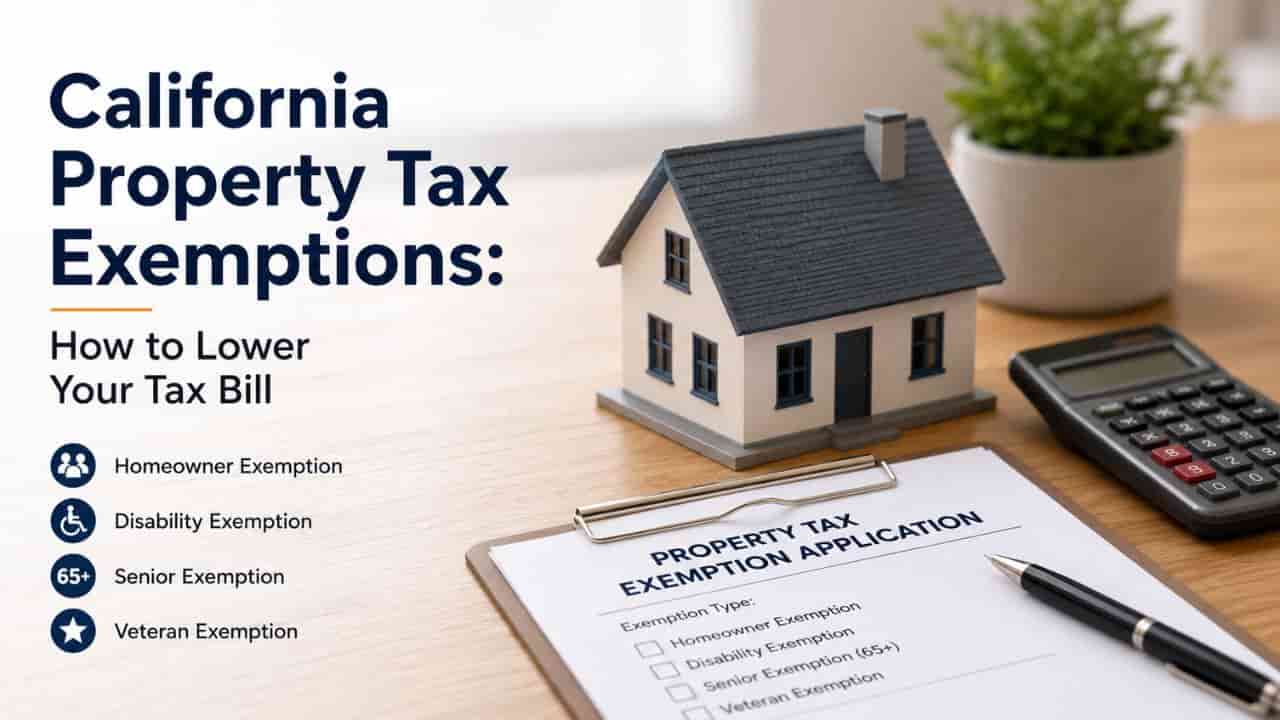
The Homeowners’ Exemption
If you own a property and it serves as your principal place of residence as of January 1st, you qualify for the Homeowners’ Exemption.
- This reduces your property’s assessed value by $7,000.
- While it sounds modest, it saves you roughly $70 per year in perpetuity.
- You only need to file this form once with your County Assessor after moving in; it renews automatically until you move out.
Additional Legal Exemptions
- Disabled Veterans’ Exemption:
Provides a substantially higher reduction in assessed value for veterans who have sustained service-connected disabilities. - Disaster Relief (Prop 8):
If your home is damaged or destroyed by a natural disaster (such as a wildfire or earthquake), you can request a temporary downward adjustment of your base year value until the property is fully repaired. - Propositions 19:
Allows homeowners over the age of 55, or those with severe disabilities, to transfer their existing, lower Proposition 13 base year value to a newly purchased primary residence anywhere within the state of California.
Summary Checklist for New California Homeowners
To wrap up your introduction to the California property tax ecosystem, ensure you execute these critical steps to keep your account in good standing:
- Verify Your Homeowners’ Exemption:
File the claim form with your County Assessor as soon as you occupy your new primary home. - Set Calendar Alerts:
Bookmark December 10th and April 10th. Do not wait for a reminder statement in the mail. - Check for Supplemental Bills:
Watch your mailbox closely during the first 6 to 12 months of ownership. Budget accordingly for this one time adjustments expense. - Review Your Escrow Account Statement:
Confirm exactly what your mortgage lender is paying on your behalf versus what you must handle directly.
Expert Conclusion
Mastering the California property tax framework is essential for protecting your real estate investment. By understanding how the base year value regulates your long-term liabilities under Proposition 13, you can accurately budget for your annual secured property tax obligations. Do not let unexpected supplemental property tax bills or strict county tax collector deadlines compromise your financial security. Work proactively with your local county assessor, capitalize on the standard homeowners’ exemption, and keep the state’s fiscal year timeline top of mind. Managing your property taxes like an expert protects your equity and keeps your household running smoothly.
FAQs
What is the base rate for California property tax?
The base rate for California property tax is capped strictly at 1% of the property’s base year value, as mandated by Proposition 13. However, your final bill from the county tax collector will usually range between 1.1% and 1.4% because local counties add voter-approved bonds for schools, infrastructure, and emergency services to the assessment roll.
When are California secured property tax bills due?
California operates on a specific fiscal year calendar. The first installment of your secured property tax is due on November 1st and becomes delinquent if not paid by December 10th. The second installment is due on February 1st and becomes delinquent if not paid by April 10th.
What happens if I miss a property tax deadline in California?
If you miss a payment deadline set by the county tax collector (December 10th or April 10th), an immediate, non-negotiable 10% delinquency penalty is added to your bill. For the second installment, additional administrative costs are also applied. If taxes remain unpaid for five years, the state can auction the property.
Why did I receive a supplemental property tax bill?
A supplemental property tax bill is issued by the county assessor when a change of ownership occurs. Because the standard assessment roll is updated only once a year, this separate bill accounts for the tax difference between the previous owner’s old base year value and your new purchase price.
Does my mortgage escrow account cover my supplemental tax bill?
No. Standard mortgage escrow (impound) accounts are set up to pay your regular annual secured property tax bills. They do not automatically receive or pay one-time supplemental property tax bills. You must forward this bill to your lender manually or pay it directly to avoid penalties.
How can a new homeowner apply for the California homeowners’ exemption?
To claim the homeowners’ exemption, you must file a claim form directly with your local county assessor. To receive the full reduction, you must submit the form by February 15th after purchasing your primary residence. This drops your assessed base year value by $7,000 and saves you roughly $70 every year.
What is the difference between secured and unsecured property tax?
A secured property tax is physically linked to real estate, meaning the land or home acts as collateral for payment. An unsecured property tax applies to movable personal property, such as office equipment, boats, or private airplanes, where the taxes are a personal liability rather than a lien on real property.
How often can the county assessor re-evaluate my home’s value?
Under California law, your property’s assessed value on the assessment roll can only grow by a maximum of 2% per year based on inflation. However, a complete reassessment to current market value is triggered immediately if there is a change of ownership or if you perform major new construction.
Can I lower my property tax if my home value drops below the purchase price?
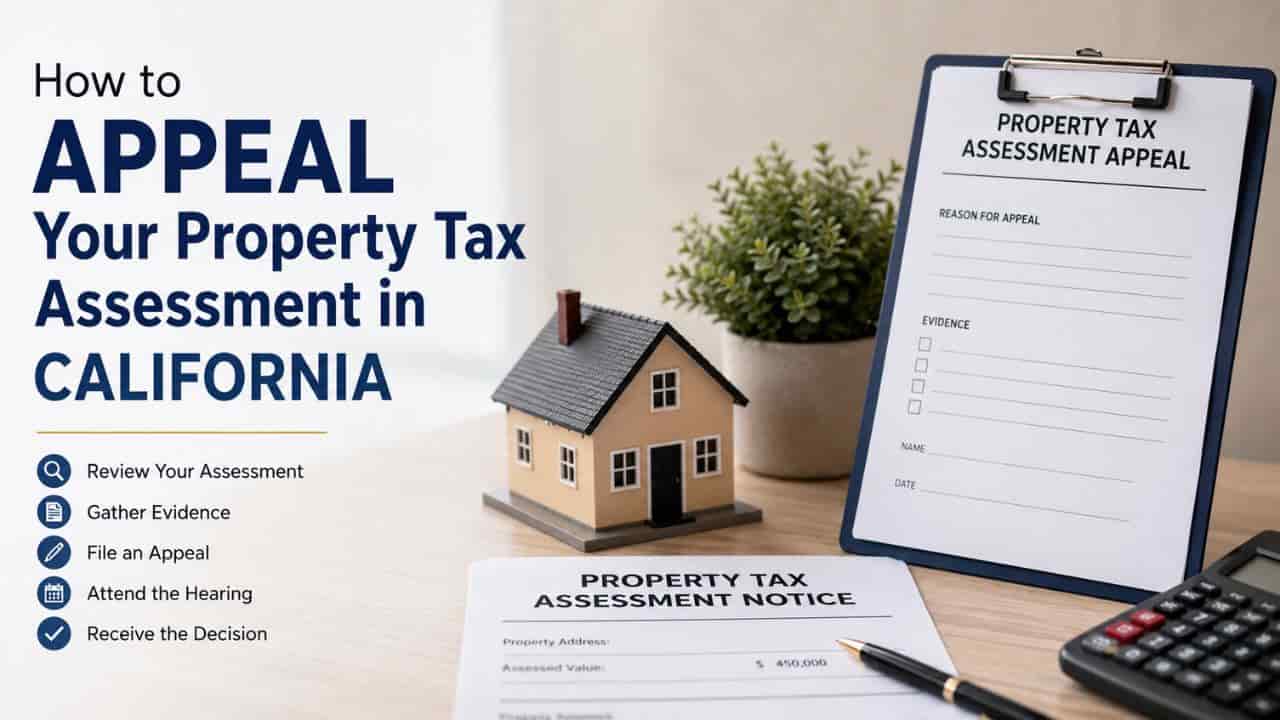
Yes. Under Proposition 8, if the market value of your property falls below its current assessed base year value (due to economic downturns or disasters), you can file a decline-in-value appeal with the county assessor for a temporary property tax reduction.
Can seniors transfer their Prop 13 tax base to a new home?
Yes. Thanks to Proposition 19, eligible homeowners who are over the age of 55, severely disabled, or victims of wildfires/natural disasters can transfer their lower, historical Proposition 13 base year value to a newly purchased primary residence anywhere within the state of California.